Leadership without authority
Discover science-backed leadership strategies for L&D professionals that build influence without formal authority.
Ruslan Karimov
Ever wondered if you need a fancy title to make a real impact? Spoiler alert: you absolutely don’t!
Picture this: You’re sitting in a meeting when a colleague drops this bombshell – “I don’t think I can be a leader – I don’t have a team to manage.” Sound familiar? If you’ve ever felt stuck because you lack formal authority, this post reveals how leadership without authority actually works.
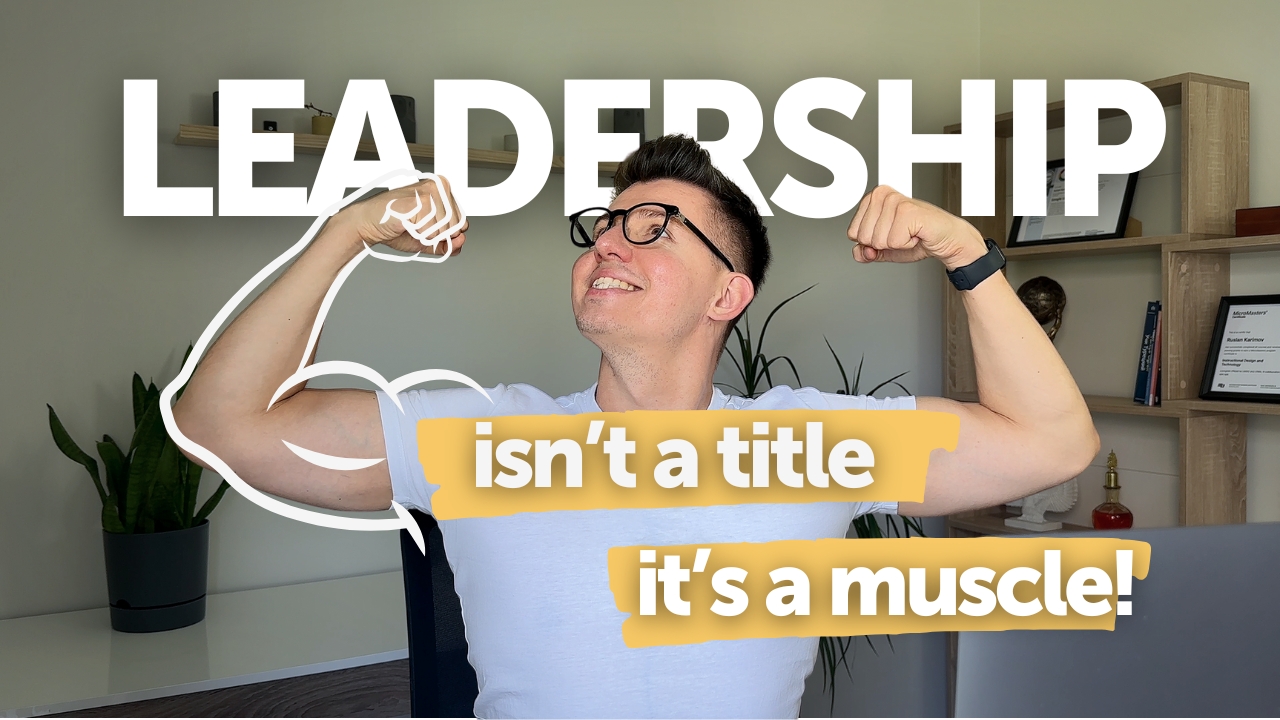
Leadership isn’t about corner offices or org charts. It’s about influence, impact, and the courage to step up when it matters most. Whether you’re an instructional designer, training coordinator, or learning specialist, you already have everything you need to practice this approach from exactly where you are.
Here’s the thing that might surprise you: some of the most impactful L&D professionals demonstrate these principles every single day. Yet their presence, initiative, and ability to influence others made them leaders in every sense of the word.
Take Anna, for example. She practiced these concepts perfectly – she wasn’t a manager, but she consistently helped others solve problems, guided decision-making, and improved how the team worked together. People naturally turned to her – not because they had to, but because they trusted her judgment.
McKinsey research confirms this reality: some people in formal leadership roles aren’t effective leaders, while others demonstrate influence without formal roles through their actions.
A fascinating 2024 study from Danish healthcare teams revealed something incredible about this approach: when leadership responsibilities are distributed across team members rather than centralized, performance improves significantly. When people at every level practice these skills, teams become more agile and effective.
This isn’t just healthcare magic – it applies directly to L&D teams where collaboration and expertise sharing drive success.
“But I’m just not a natural leader!” Sound like you? Here’s some encouraging news that might change your perspective on this type of leadership forever.
A comprehensive University of Illinois study analyzed data from over 300,000 people and found that the ability to demonstrate these skills is approximately 30% genetic and 70% developed through experience and deliberate practice.
That means most of your capacity for influencing others comes from learning, reflection, and consistent effort. Pretty amazing, right?
This research is a total game-changer for L&D professionals interested in this approach. It means you’re not stuck with your current influence level. Every interaction, every project, every challenge is an opportunity to build these crucial skills.
Ready for the good stuff? Here are nine evidence-based behaviors that consistently create value when practicing this approach in L&D – regardless of your role.
What it looks like: Doing what’s right, even when it’s difficult or uncomfortable.
Picture this scenario: A client requests a quick training fix for a complex performance issue. The easy path? Deliver exactly what they asked for and collect your paycheck. The leadership path? Recommend a more effective approach that actually solves their problem.
That’s integrity in action when practicing this approach – and it builds the kind of trust that transforms careers.
The compelling data: LinkedIn Learning reports that 94% of employees would stay longer at companies that invest in learning opportunities. This tells us that innovation in training isn’t just helpful – it’s expected.
Your opportunity for influence: Experiment with new tools, formats, or approaches. Whether it’s gamification, microlearning, or AI-powered personalization, being the person who brings fresh ideas demonstrates clear influence and value.
Here’s a real-world example that perfectly illustrates this behavior’s power:
A learning professional joined a project focused on improving product knowledge for a sales team. But after listening carefully to the real conversations happening, it became clear their main challenge wasn’t product knowledge – it was handling objections.
Because they listened first, they could redesign the training to meet the actual need. That’s the difference between being helpful and demonstrating true leadership without authority.
The truth bomb: Effective learning isn’t created in isolation. It’s grounded in understanding your learners’ reality – whether that’s limited time, high-pressure environments, or limited access to resources.
One company struggled with safety compliance training. The issue? The training assumed perfect circumstances, but the work environment was far from ideal. Until the L&D team observed the real context, their solution couldn’t work.
Empathy allows you to create solutions that demonstrate leadership without authority while being both relevant and actually practical.
Sometimes leadership means saying, “I don’t think training is the solution here.” Offering that kind of insight – especially when it goes against expectations – takes serious confidence.
But here’s the beautiful paradox of leadership without authority: the more you’re willing to challenge training requests that won’t work, the more people trust your recommendations when you do suggest training.
Leaders in L&D see patterns and opportunities others might overlook. This could mean recognizing how a new platform could streamline onboarding, how microlearning could improve retention, or how social learning could boost engagement.
Vision allows you to connect the dots early and guide others toward future success.
Whether you’re presenting to stakeholders or explaining a concept to your team, communication is your secret weapon. According to the American Management Association, poor communication – not poor design – is one of the leading causes of failed training initiatives.
Clear messaging helps others engage with your ideas and builds alignment around your work.
Here’s a perspective shift that changes everything: Bersin by Deloitte research shows that high-performing L&D teams focus on business impact rather than just metrics like course completion rates.
The leadership question: Instead of asking “Did they finish it?” ask “What changed because of this training?” This shift leads to better decisions and more meaningful work.
When a learning solution isn’t working, leaders dig deeper. They investigate root causes, collaborate with stakeholders, and implement changes that create sustainable improvement.
This behavior separates the order-takers from the strategic partners.
This approach in L&D isn’t limited to people with “Manager” in their job title. It’s defined by how you think, communicate, and collaborate with others through consistent practice of these principles.
The most exciting part? Every behavior we’ve discussed can be learned and strengthened over time. You’re not stuck with your current level of influence – you’re just getting started.
Choose one behavior from the nine we covered and commit to practicing it this week. Whether it’s active listening in your next stakeholder meeting or showing empathy in your next learning design project, small consistent actions create remarkable transformations.
Which behavior resonates most with you? And more importantly, which one will you focus on developing next? Your future influence depends on the actions you take today.
Ready to transform your L&D career through leadership without authority? Start with one small win this week - your future self will thank you.
Discover science-backed leadership strategies for L&D professionals that build influence without formal authority.

Learn how to create courses that use audience analysis to boost success rates and transform your learners’ lives.